Prokaryotic Cell
Parts, Functions & Diagrams of Prokaryotes
from Science Prof Online
Science Prof Online (SPO) is a FREE science education website. Donations are key in helping us continue to provide this FREE resource.
Please help!
(This donation link uses PayPal on a secure connection.)
Prokaryotes are all single-cell organisms, and include bacteria, and bacteria-like Archaea. Prokaryotic cells are much simpler than the more evolutionarily advanced eukaryotic cell. Whereas eukaryotic cells have many different functional compartments, divided by membranes, prokaryotes only have one membrane, the plasma membrane, which encloses all of the cell’s internal contents. If a eukaryotic cell is analogous to a big house with many different rooms, a prokaryotic cell is like a one-room, studio apartment.
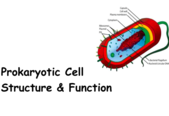
Here is a list and description of the main cellular components of prokaryotes. A labeled diagrams of prokaryotic cells is linked above, on the left:
Internal Structures of Prokaryotic Cells
- Plasma Membrane: The plasma membrane is a double-layer of phospholipids with associated proteins and other molecules. The plasma membrane is essentially the “bag” that holds all of the intracellular material and regulates the movement of materials into and out of the cell.
- Cytoplasm: This is what the cell is filled with, inside the plasma membrane - a gel-like liquid with all of the cellular organelles suspended within.
- Cytoskeleton: It has only recently been discovered that rod-shaped bacteria and Archaea possess cytoskeletal proteins that function in a similar way to the cytoskeleton of eukaryotic cells. The cytoskeleton provides structural support to the cell and plays a role in cell-division.
- Ribosomes: All cells, both prokaryotic and eukaryotic, have multiple ribosomes within. Ribosomes are the protein-making machinery of the cell.
Article Summary: Prokaryotes - simple, single-cells, yet remarkably successful organisms. Here's an overview of the structures and functions of prokaryotic cells.
Prokaryotic Cell Structures, Functions & Diagrams
You have free access to a large collection of materials used in a college-level introductory microbiology course. The Virtual Microbiology Classroom provides a wide range of free educational resources including PowerPoint Lectures, Study Guides, Review Questions and Practice Test Questions.
You have free access to a large collection of materials used in a college-level introductory Cell Biology Course. The Virtual Cell Biology Classroom provides a wide range of free educational resources including Power Point Lectures, Study Guides, Review Questions and Practice Test Questions.
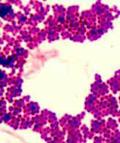
Image of a prokaryotic cell. For a labeled diagram of same cell, click here.
Genetic Material of Prokaryotes
- Nucleoid: The nucleoid is the region of the cytoplasm that contains the genome—the main genetic material of the cell. Bacteria and Archaeans typically have a single, circular chromosome.
- Plasmids: In addition to the bacterial chromosome, bacteria may also contain one or more plasmids. A plasmid is a non-essential piece of DNA that confers an advantage to the bacteria, such as antibiotic resistance, virulence (the ability to cause disease) and conjugation (a bacterium’s ability to share its plasmids with other bacteria). Plasmids are also found in some eukaryotic microbes, such as yeasts.
Prokaryotic Cell Structures Outside of Plasma Membrane
- Cell Wall: Nearly all prokaryotes have a protective cell wall that prevents them from bursting in a hypotonic environment (an aqueous environment with a lower concentration of solutes than are found within the cell). The composition of cell walls vary depending on the type of organisms, but most cell walls contain a combination of the major organic molecules—proteins, carbohydrates and lipids. Bacteria have a unique molecule called peptidoglycan in their cell wall. Archaean cell walls do not contain this molecule. Cell wall composition of bacteria allow scientists to classify bacteria as either Gram-positive or Gram-negative.
- Glycocalyx: The glycocalyx is a layer present in some bacteria, and located outside of the cell. There are two types of glycocalyces: slime layers and capsules. Slime layers help bacteria stick to things and protect them from drying out, particularly in hypertonic environments. Capsules also allow bacteria to stick to things, but have the added benefit of helping encapsulated bacteria hide from the hosts immune system.
- Cell Extentions: There are several different types of cell extensions associated with bacteria, all a made of delicate protein strands. Bacterial cell extensions include:
- flagella: long whip-like extensions that help bacteria move about the environment
- fimbriae: allow bacteria to adhere to target host cells, so play a major role in
bacterial virulence
bacteria
Sources
- Bauman, R. (2005) Microbiology. Pearson Benjamin Cummings.
- Becker, W. M. et. al. (2009) The World of the Cell. Pearson Benjamin Cummings.
- Campbell, N. & Reece. J. (2002) Biology, Sixth Edition. Benjamin Cummings.
This article originally appeared on Suite101 online magazine.
Page last updated 2/13/2012