
 | ||||
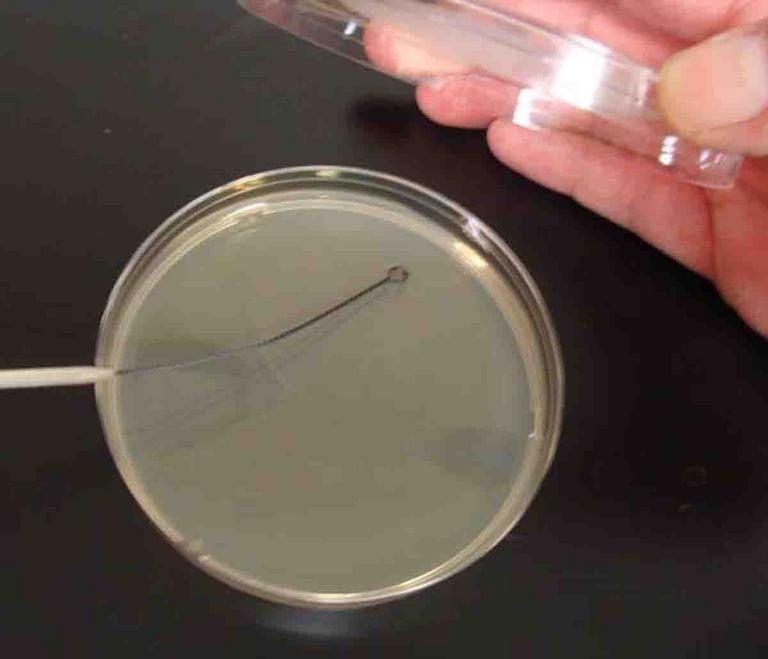
How to Use an Inoculation Loop
to Transfer Bacteria
Article Summary: Also called an inoculation wand and microstreaker, this metal loop is a reusable tool used to transfer bacterial samples from one location to another.
How to Use an Inoculation Loop to Transfer Bacteria
Sterile disposable swabs can also be used to transfer bacteria.
Microbiology is the study of microscopic organisms and infectious agents including bacteria, viruses, protozoans, fungi, algae and parasitic worms. The practice of microbiology often involves working with microbes, typically bacteria, in a laboratory setting, and transferring bacterial samples from one location to another.
Transfer of Bacterial Samples
Clinical samples (biological samples obtained from a patient) are often obtained using a sterile swab which is then streaked onto a sterile growth medium (a plate).
Page last updated: 10/2014

| ||||||
SPO VIRTUAL CLASSROOMS
Bacterial growth media provide nutrients, water, and a surface where the bacteria can multiply. Sometimes bacteria are transferred from one plate to another, such as when a microbiologist is trying to isolate a specific type of bacteria or when preparing multiple plates of a specific type of bacteria for microbiology students to use.
In transferring bacteria, it is important that the bacterial sample not become contaminated with bacteria from the surrounding environment. This is why media plates are sterile prior to being inoculated with a sample. The instrument used to transfer bacteria must also initially be sterile, before the bacterial sample is obtained. The entire process of trying to reduce contamination of materials used in microbiology is called practicing sterile, or aseptic technique.
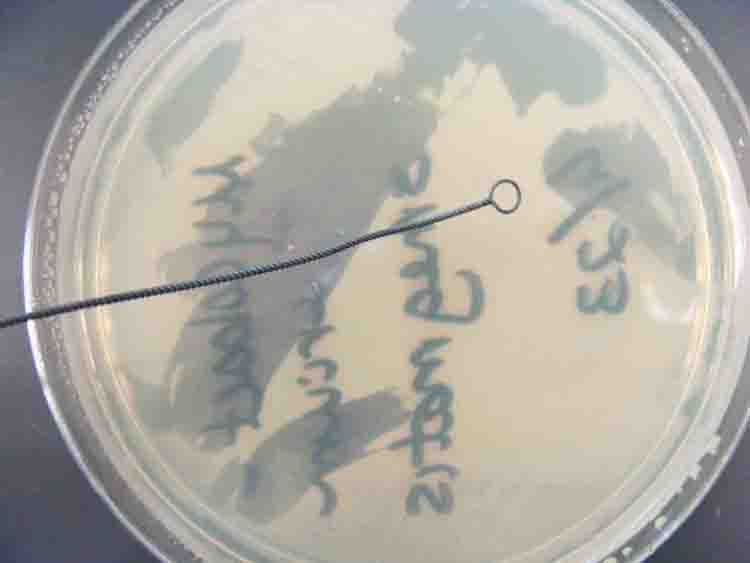
Advantage of Using an Inoculation Loop
An inoculation loop is a thin metal device with a handle at one end and a looped wire at the other end. The looped end is useful for obtaining bacterial samples from colonies growing on media plates or from liquid media, as the loop can hold a drop of liquid, somewhat like a bubble wand holds liquid soap.
There are disposable devices used to transfer bacterial samples, such as sterile swabs and even sterilized toothpicks. The advantage of an inoculation loop is that the instrument can be used and sterilized repeatedly, reducing the amount of contaminated lab waste generated.
Page last updated:
2/2016
You have free access to a large collection of materials used in two college-level introductory microbiology courses (8-week & 16-week). The Virtual Microbiology Classroom provides a wide range of free educational resources including PowerPoint Lectures, Study Guides, Review Questions and Practice Test Questions.


