
 | ||||
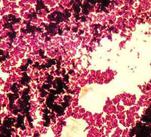
Gram Positive Bacteria
Gram+ Bacterial Cell Wall Structure
Nearly all bacteria have a cell wall containing peptidoglycan, a chemical unique to bacterial cells. The rigid structure of the bacterial cell wall is due to securely linked peptidoglycan molecules that surround the cytoplasmic membrane, giving the prokaryotic
bacterial cell shape and protection.
Gram-positive Cell Wall
From the peptidoglycan inwards all bacterial cells are very similar.
Article Summary: Most bacteria have one of two types of cell walls. Here are the features of the Gram-positive bacterial cell wall that distinguish it from Gram-.
Gram-positive Bacterial Cell Wall

SCIENCE PHOTOS

SPO VIRTUAL CLASSROOMS
| ||||||

Going further out, the bacterial world divides into two major classes: Gram positive (Gram +) and Gram negative (Gram -).
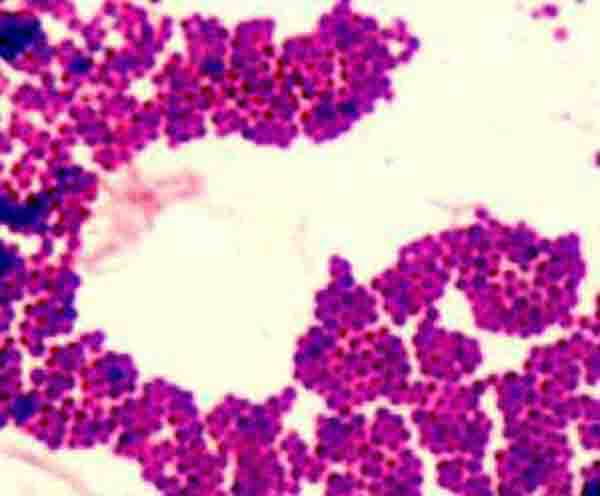
Gram-positive Staphylococcus epidermidis @ 1000xTM+

In Gram-positive cells, peptidoglycan makes up as much as 90% of the thick cell wall; more than 20 layers of peptidoglycan
stacked together. These layers are the outermost cell wall structure of Gram+ cells, whereas in Gram-negative cells, the thinner peptidoglycan component is covered by an external lipopolysaccharide (LPS) membrane.
The Gram Stain
Once scientists understood that infectious disease was caused by microorganisms (Germ Theory), it was imperative to find a way to view bacteria and other microbes; because in addition to being minute, most bacteria colorless.
In the 1800’s, Christian Gram, a Danish bacteriologist, developed a technique for staining bacteria that is still widely used today. The Gram stain protocol involves the application of a series of dyes that leaves some bacteria purple (Gram+) and others pink (Gram-).
Continued ...

Page last updated: 11/2015
You have free access to a large collection of materials used in a college-level introductory microbiology course. The Virtual Microbiology Classroom provides a wide range of free educational resources including PowerPoint Lectures, Study Guides, Review Questions and Practice Test Questions.

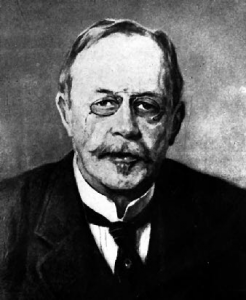
H. C. Gram

